Introduction – The Role of Dairy Processing in a Net-Zero Future
Decarbonizing dairy across the full supply chain is critical to achieving global climate targets. Dairy processing, as a key link between farm and consumer, plays a central role in this transformation. It is one of the most energy- and resource-intensive stages of the value chain, yet it offers significant opportunities to cut emissions through efficiency improvements, electrification, and integration of renewable energy.
The P2DNZ Dairy Processing Task Force was launched in 2023 with industry leadership from Tetra Pak, as a pre-competitive global forum dedicated to helping the dairy sector rapidly reduce Scope 1 emissions – the emissions produced directly from processing operations. This collaborative effort reflects a shared commitment to innovation and transparency, ensuring that solutions are practical, science-based, and aligned with global net-zero ambitions.
Lower energy and water use translates into cost savings and operational resilience, while cutting carbon footprints supports climate goals and strengthens trust in dairy as a sustainable source of nutrition. Innovation in dairy processing can help build a more efficient, climate-resilient food system while continuing to deliver the nutritional benefits of dairy.
Indirect UHT milk processing in focus: products, process, and challenges
Ambient dairy lines allow products to remain safe at room temperature for months without refrigeration. In an indirect UHT system, the product is heated through heat exchangers rather than direct steam injection, ensuring sterilization while maintaining quality.
These lines typically produce long-life milk, cream, flavored dairy drinks and other dairy products Their key advantage is food safety and extended shelf life, reducing dependence on cold chains and helping prevent food waste.
The challenge: high energy demand, water‑intensive Clean‑in‑Place (CIP) cleaning cycles and sterilization, and missed recovery opportunities. Indirect systems have significant potential to reclaim heat and water, thanks to closed heating loops and condensate streams, but older designs rarely capture these resources, increasing environmental impact.
Building on Taskforce discussions, a set of proven, ready‑to‑deploy solutions has been identified to drive carbon reduction, water efficiency, and loss prevention for this line.
Ready-to-deploy solutions for Indirect UHT milk processing lines
Reducing energy consumption
Heat Regeneration & Heat Exchanger Optimisation
- Up to >90% heat regeneration possible product-to-product heat exchange.
- Proper insulation reduces heat loss further.
Reducing product losses, energy & water consumption
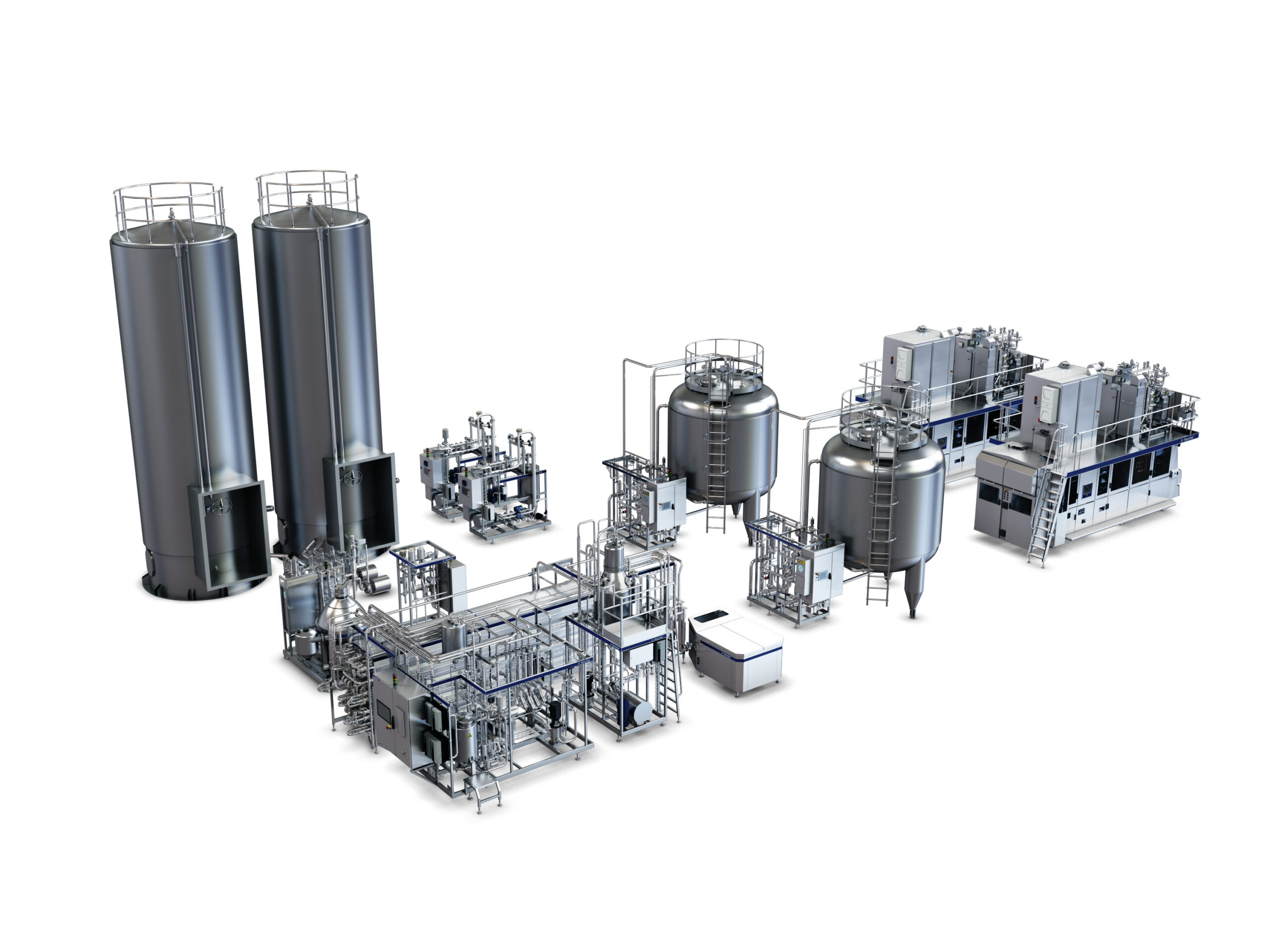
The Optimised UHT Line (without pasteurisation) offers the most efficient and sustainable solution for producing white milk and formulated dairy products. It enables customers to maximize sustainability and cost-effectiveness while improving flexibility and product quality.
By eliminating unnecessary steps, such as pasteurization and intermediate storage, raw milk flows directly from storage to the UHT unit. Here, it is separated, standardized, homogenized, and heat-treated in a streamlined process. This lean design reduces processing time and minimizes working volume within the plant.
The key to flexibility lies in the standardizing unit, which manages downstream processes and compensates for mix phases in aseptic storage. It also functions as an in-line blender, allowing the UHT unit to formulate a wide range of products.
In short, Optimised UHT Line (without pasteurisation) lowers operating costs, enhances product quality, and reduces environmental impact—all through a single, simplified process.
- Skipping pre-pasteurization and moving to continuous processing lowers utilities dramatically:
- 38% reduction in electricity
- 45% reduction in steam
- Reduced building footprint
- Fewer CIP cycles
Estimated impact: carbon, water, and loss reduction
Tetra Pak have worked with the Carbon Trust, who have reviewed and aligned the assessment with best practice frameworks like the WBCSD’s Avoided Emissions Guidance and the Net Carbon Impact Methodology from the European Green Digital Coalition.
This assessment compared best available lines from 2019, used as a representative of traditional lines, with market-ready solutions in 2025 for carbon, water, and product loss reduction, like the ones described in this document.
Implementing a recommended set of best practice solutions across an existing Indirect UHT milk processing lines can reduce emissions by up to 46% compared to a best available line in 2019. At a global level, this could deliver potential annual savings of 2.7 mtCO₂e, if applied across all Indirect UHT milk processing lines worldwide. Water use can be reduced by up to 44%, and product losses by up to 59% compared to 2019 benchmarks.
Scaling solutions: the role of policy and investment
Meeting global climate targets demands urgent action in food systems, and dairy processing is a critical lever.
Deploying available solutions at scale can lower operating costs, improve resource efficiency, and strengthen competitiveness. With supportive policies and targeted investments, the sector can accelerate deployment of these technologies, attract green financing, create jobs in clean technology, and position dairy as a leader in sustainable growth. With the right policies and partnerships, we can make this stage of the value chain more sustainable and resilient, ensuring dairy processing becomes more sustainable while maintaining the sector’s economic viability.