The challenge of developing a healthy, sustainable global food system is a balance – while trying to mitigate the environmental impact of farming and food production, it’s also vital to provide enough safe, nutritious, high-quality food to nourish a growing world population, which the UN forecasts will reach nearly 10 billion by 2050.
During Climate Week NYC, Global Dairy Platform (GDP) brought together leading experts from across the food system for a candid discussion on how to improve global nutritional security while reducing environmental impacts through efforts such as Pathways to Dairy Net Zero (P2DNZ). The side event, “Why Healthy, Sustainable Food Systems Need Nutrition and Climate Action,” highlighted that tackling hunger and climate change must go hand in hand. The event took place Sept. 24 at TIAA Financial Services, 730 Third Ave., Fifth Floor, New York, followed by a reception co-hosted by GDP and the International Livestock Research Institute (ILRI).

The discussion was in advance of UNFCCC COP30, which starts in Belém, Brazil, this week, two years after COP28 brought nutrition and environmental impact together in the Emirates Declaration on Sustainable Agriculture, Resilient Food Systems, and Climate Action, which was signed by 159 countries.
Professor Appolinaire Djikeng, Director General, ILRI, delivered the opening statement, followed by a conversation between event moderator Donald Moore, Executive Director, Global Dairy Platform, with Mario Herrero, Professor in the Cornell CALS Department of Global Development and Director of Food Systems & Global Change.
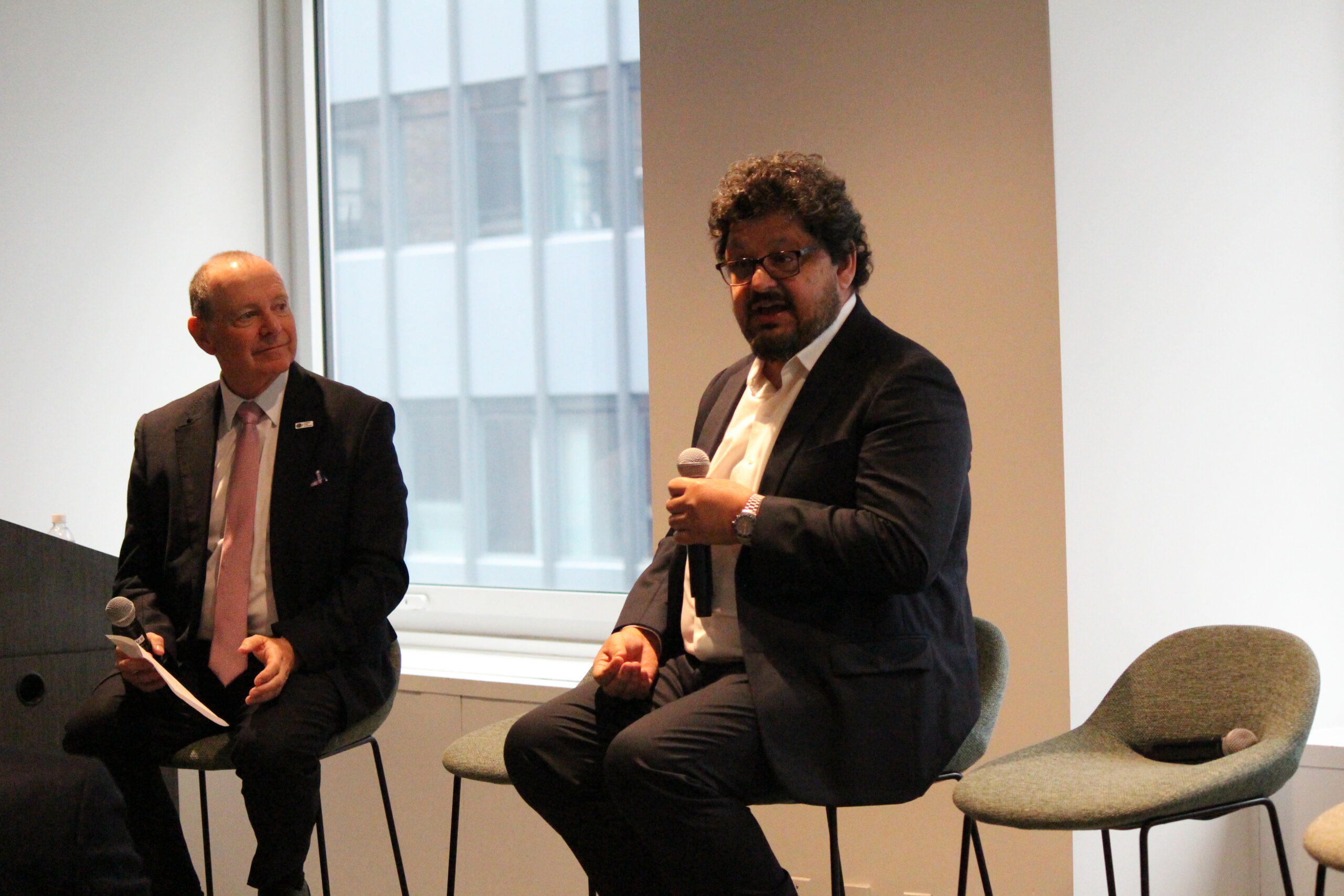 The first panel, titled “Why We Should Co-Prioritize Nutrition and Climate” was moderated by Hanne Søndergaard, EVP, Agriculture, Sustainability & Communications, Arla Foods, and included Mary Kraft, Kraft Family Dairies, Colorado, U.S.; Andrea Porro, Secretary General, World Farmers’ Organization; and Thanawat Tiensin, Assistant Director-General, Director of the Animal Production and Health Division, Chief Veterinarian, FAO (virtually).
The second panel, moderated by Moore and titled, “How Focusing on Nutrition and Climate Can Drive Progress,” featured Charlotte Rutherford, Director of Sustainability, Fonterra; Chris Adamo, Global Sustainability Impact & B Corp, Danone; and Jackie Klippenstein, SVP and Chief Government and Industry Relations Officer, Dairy Farmers of America.
A Global Nutrition Crisis
Djikeng cited statistics from the 2024 State of Food Security and Nutrition in the World (SOFI) report, including that 733 million people faced hunger in 2023, while 2.33 billion experienced food insecurity. Nearly 2.8 billion could not afford a healthy diet in 2022, and 22.3 percent of children under five remain stunted.
Despite producing enough food to feed one and a half times the current global population, hunger and malnutrition are rising, he said.
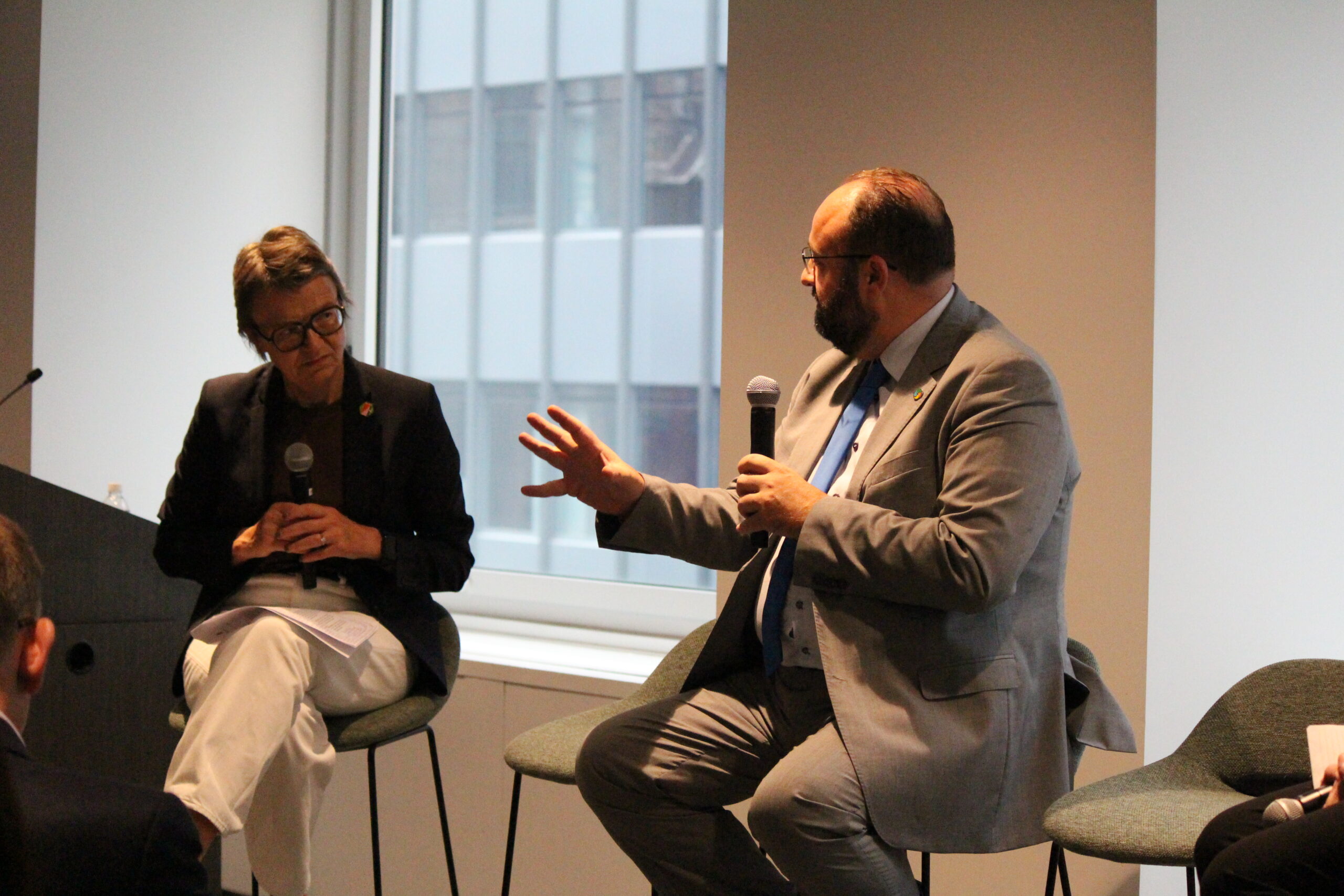
“We’re failing on nutrition,” Djikeng said. “A lot of people are not receiving nutrition even though the food exists.”
Djikeng says livestock must be viewed as an integral part of the food system. He cited a study of school feeding programs in Africa that included livestock-derived foods, such as providing an egg a day, increased child height-for-age and reduced stunting by nearly 7 percent.
“It’s about providing diets, nutrition for health,” Djikeng explained. “That has to be the starting point.”
In many parts of the world, smallholder farmers are leading the charge in providing nutritional food, he said. These farmers produce 75 percent of livestock derived foods in Africa and Asia, and play a critical role in linking food production with nutrition outcomes. Informal markets, which supply 70 percent of animal-sourced foods in low and middle-income countries, are equally vital in ensuring local access and sustaining local economies.
Increasing Efficiency of Production
Between 2018 and 2022, global dairy productivity increased by 4 percent, which helps minimize environmental impacts by producing more milk from fewer animals, according to a Systems Change Lab study mentioned by Djikeng.
“We are doing something very well,” he said. “This is a strong message. We can use this as an example to move in this direction.”
Herrero also emphasized the importance of production improvements, and said it gives him hope for the future.
“Productivity increases have been almost non-stop all around the world,” he said.
Herrero, who led a team that conducted modeling for the EAT-Lancet Planetary Health Diet released in early October, discussed with Moore how they tackled the project.
He was asked what advice he would have for policymakers who are trying to tackle the future of the food system in the next several years. After responding that governments should take seriously the change that’s required, he added, “We are all in the same boat, trying to create positive change.” We need to put money toward increased productivity probably with fewer animals, and keep the investment routes open as much as possible, he added.
During the first panel discussion, Tiensin reinforced the need to increase efficiency while lowering emissions.
“We need to work with (farmers) to make sure we bring solutions so today they can feed 8 billion people and by 2050 feed 10 billion people,” he said. “We need to produce more, but with less impact.”
Ensuring Farmers Receive Adequate Support
Also on the first panel, Kraft and Porro emphasized that farmers need to be considered, consulted and supported in efforts to lessen on-farm environmental impact.
Many farmers are operating on tight margins, Porro said, and need to receive adequate investment.
“You cannot go green if you’re in the red,” Porro said. “That’s the challenge today for a lot of farmers.” If food producers are food insecure, “then definitely something is broken in our food system.”
Kraft, whose farm – owned with her husband and son – milks 6,500 cows, plus 6,500 calves, discussed the importance of large farms as well as smallholder farmers in feeding the world. She explained how her farm harnesses technology, including receiving real-time inputs from animals that improve animal care.
She also discussed the key points she made during the Farmer/Fisher Community for Action Dialogue in advance of the EAT Stockholm Food Forum (SFF). Kraft was one of several dairy farmers organized by GDP from across the world who participated in the pre-SFF dialogue as well as at the SFF itself.
One of her main points during the EAT dialogues was “This is a poker game. Everybody gets a different set of cards to play with” including different climates, amount of water, financing, economic rules, government programs and policies. Farmers are all trying to feed the world, but we need to understand that one size doesn’t fit all, she added.
Different Paths to the Environment/Nutrition Goal
During the second panel discussion, panelists described how their companies are working to lessen the environmental footprint of dairy products in a variety of ways, such as through partnerships and working directly with farmers.
Rutherford discussed the pasture-based dairy farming system in New Zealand, which aligns with biodiversity goals and incorporates many of the attributes of regenerative farming, including no tillage and rotational grazing.
“The reason we have a grass-feed system is our temperate climate – it rains and the sun shines at mostly the right time of the year,” she said.
Klippenstein recognized the work Kraft, other farmers and their families have been doing for generations to prioritize soil health, animal care and many other aspects of sustainability. “They’ve always had an economic incentive to do right by the environment,” she said.
She also discussed the role she and others on the P2DNZ GHG Accounting Task Force have done to review and recommend dairy-specific input to the GHG Protocol’s Land Sector and Removals Guidance.
“The dairy industry is all-in on this effort,” she said. “The goal now is to identify ways to make this really work, to demonstrate the activity on the farm, and make sure that the proper entities – starting with the farmers – are getting credit for the activity.”
Adamo reviewed the variety of sustainability-focused collaborations Danone has built within the dairy/food industries and with non-profit organizations, as well as research initiatives focused on lessening the environmental impact of the value chain.
“We believe that there is a lot to be gained in these pre-competitive and often non-profit let efforts,” he said.
Nutrition Security Tied to Environmental Progress
The consensus for the day was that nutrition cannot be sacrificed for climate goals, nor can climate be ignored in the pursuit of more food production. Both outcomes must be pursued together.
The dairy sector – which provides nutrient-rich food while improving economic outcomes and continually improving its environmental performance – can be seen as part of the solution in creating a healthy, sustainable global food system.
A recording of the side event is available here.